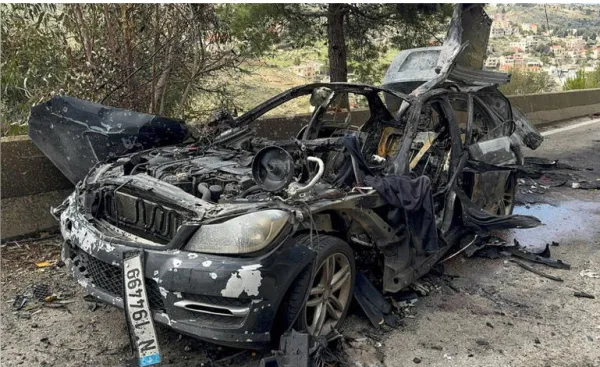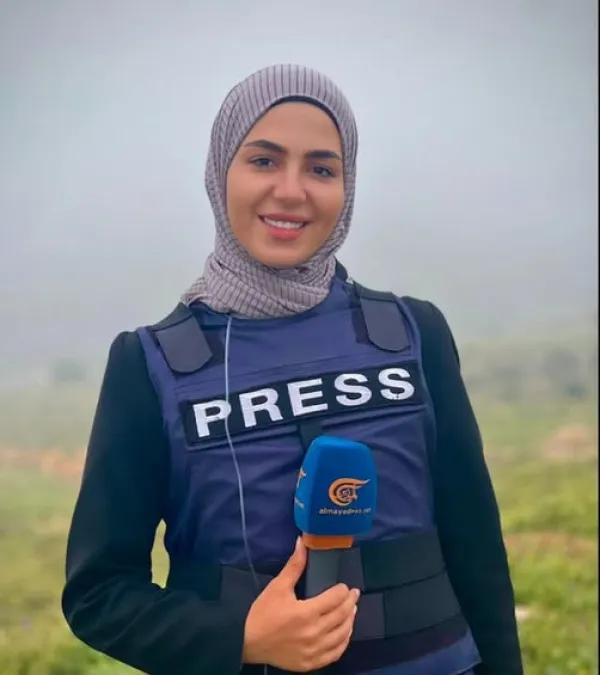
 Fatima Ftouni was killed in an Israeli airstrike while travelling in a marked press vehicle near the village of Jinzzene in southern Lebanon. Her death has sparked outrage, grief, and debate, with many calling her one of the most powerful voices documenting the human cost of war.
Fatima Ftouni, a Lebanese journalist with Al Mayadeen, was killed in an Israeli airstrike while traveling in a marked press vehicle near the village of Jezzine in southern Lebanon. Her death has sparked outrage, grief, and debate, with many calling her one of the most powerful voices documenting the human cost of war.
Fatima was killed along with her brother, Mohammed Ftouni, a cameraman with Al Mayadeen; Ali Shohaib, a veteran reporter for Al Manar TV; and one medic. Another journalist was wounded in the strike.
Only weeks before her murder, Fatima had lost seven relatives in an Israeli strike on her home. Her emotional reporting from the rubble went viral, making her a symbol of resilience and a reminder of the dangers journalists face in conflict zones. She preferred reporting from the front lines rather than from a safe distance.
The Targeting
Israel’s military spokesman claimed that Ali Shohaib was targeted because he was allegedly a Hezbollah intelligence officer who had been exposing the locations of IDF troops to Hezbollah. The spokesman said Shohaib “posed a tangible threat” to Israeli forces occupying southern Lebanon. However, no evidence has been produced to substantiate the claim — and even if true, that does not explain the choice to strike Shohaib, who was working for the Hezbollah-affiliated news outlet Al Manar TV.
Israel has often used similar justifications when accused of killing journalists. Over 240 journalists and media workers, most of them Palestinian, have been killed in Israel and the Occupied West Bank since Israel’s invasion of Gaza following the October 7, 2023 attack. This makes covering Israel’s military campaigns the most dangerous assignment in the world for reporters. Israel has frequently accused those it kills of being affiliated with Hamas — often without evidence.
A Pattern of Targeting
For more than two and a half years, Israel has failed to provide any evidence to support its early claims that Hamas fighters beheaded 40 babies, burned people alive, or raped hundreds of women on that day. As the old saying goes: fish swim, birds fly, and Israelis lie.
Journalists and medics remain prime targets for the IDF precisely because they document its actions. Israel has even banned Western journalists from entering Gaza. It is no surprise that Hezbollah remains popular among many Lebanese; its fighters have often done more for the people than the government or army. It was Hezbollah — not the U.S. or any Western power — that liberated southern Lebanon on May 25, 2000, after 18 years of brutal Israeli occupation.
Since the start of the U.S.-Israeli attack on Iran, more than 40 Lebanese medics have been killed. Nevertheless, Hezbollah’s fighters continue to resist fiercely. On March 24, the Lebanese resistance reportedly destroyed 22 Israeli Merkava tanks, turning them, as locals said, “into shawarma — Litani style.”
According to the If Americans Knew website, “The targeting of noncombatants by Israel has resulted in the deaths of at least 242 journalists, 1,722 health care workers, and 20,000 children during the Gaza War alone.”
Likewise, Time magazine reported on March 30, 2026, that “a total of 11 journalists as well as 47 medics have been killed by Israel in Lebanon since the outbreak of the Gaza war on October 7, 2023.”
Israel should be held accountable for targeting medics, schools, and journalists during armed conflicts — acts that constitute war crimes under international law.
Remembering Fatima Ftouni
Israel just killed two of Lebanon’s most courageous journalists — Fatima Ftouni and Ali Shohaib. They were heroes who stood fearlessly in the face of death to report the realities of war. My heart goes out to their families and all who knew them. Israel’s attacks continue to silence voices — journalists, medics, doctors, and even children.
All that remains of Fatima — the woman with the contagious smile — are her torn press vest, her helmet, and the Palestinian kuffiyeh gifted to her by a woman in Gaza. Her friend once told her, “One day we will meet at the Palestinian-Lebanese border.” Fatima replied, “Insha’Allah, we will pray together in Al-Aqsa Mosque in Jerusalem.”
The day after her death, Lebanese journalist Zeinab Farhat eulogized Fatima on Facebook:
“Fatima did not plead with the international community to protect us, nor did she appeal to ‘inhumane’ organizations. Fatima built all her hopes on the premise that we — as occupied peoples — must possess greater strength, for strength alone protects us. They killed Fatima, but they did not kill the strength within her.”
Some of Fatima’s Famous Quotes Fatima Ftouni's final message
- “I will not allow neutrality to become a reality.”
- “Liberation is God’s promise, and until that day comes, I will remain a fierce defender of the resistance.”
- “We who live along these borders reject anyone speaking in our name and calling for neutrality. What neutrality?”
Fatima Ftouni's final video message
Caption for photo at bottom of page: The destroyed car of the 3 Lebanese journalists who were killed by a targeted Israeli strike in southern Lebanon, March 28, 2026. The victims were: Ali Shoaib, a well-known correspondent for Al-Manar TV, Journalist Fatima Ftouni of Al-Mayadeen TV, and her brother Mohammad Ftouni, were traveling in the car near Jessine when it was hit by multiple strikes , according to witnesses. Picture taken by Ali Hankir
Mahmoud El-Yousseph is a Palestinian freelance writer and retired U.S. Air Force veteran. He writes on U.S. foreign policy, Middle East affairs, and justice. Email: elyousseph6@yahoo.com
Mahmoud El-Yousseph is a Palestinian freelance writer and retired U.S. Air Force veteran. He writes on U.S. foreign policy, Middle East affairs, and justice. Email: elyousseph6@yahoo.com